Inside Penzzer
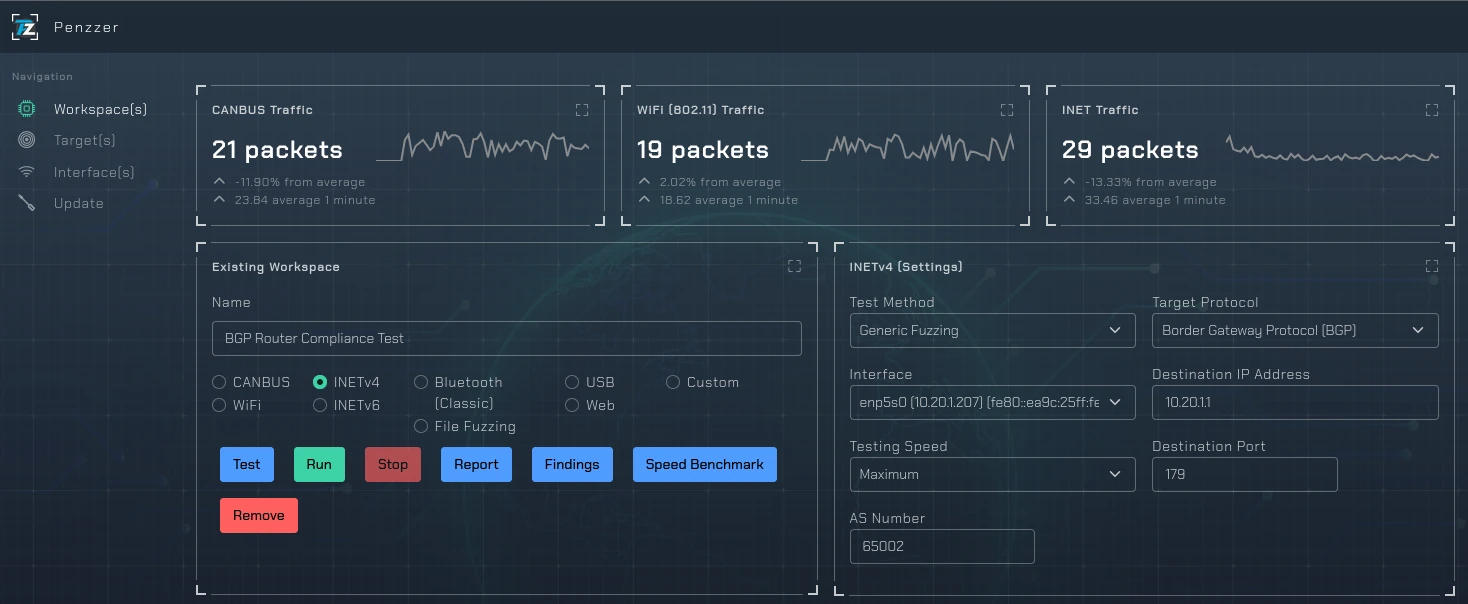
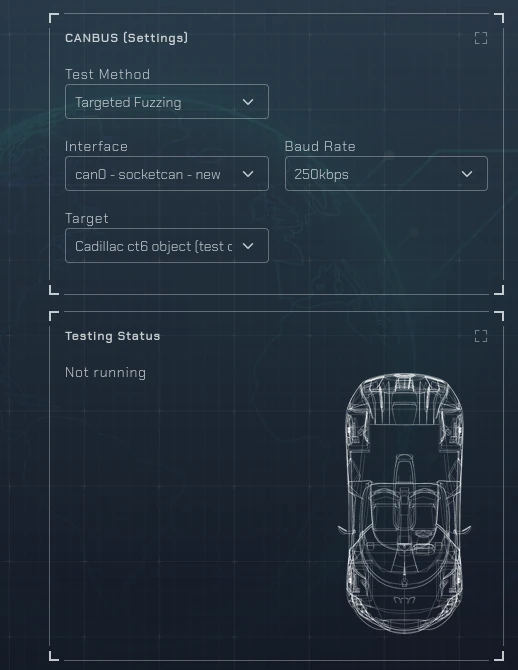
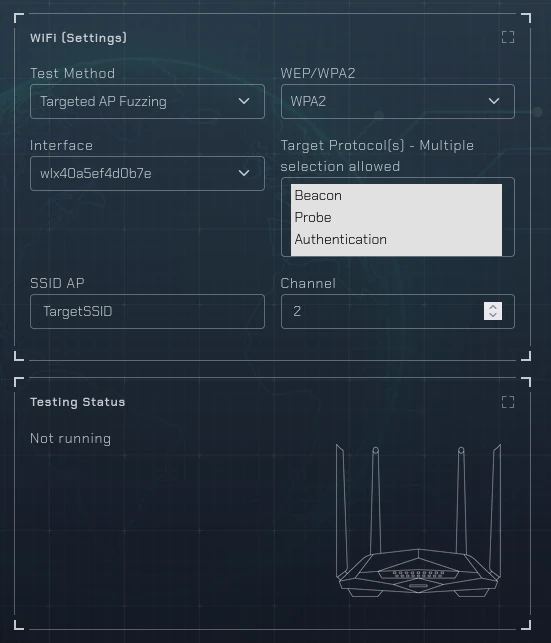
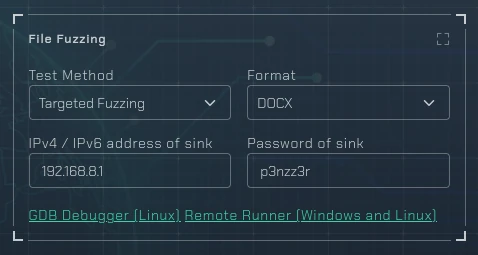
What a running campaign looks like in the product: the coverage-and-crash dashboard, plus Penzzer driving live targets across automotive, wireless, and firmware.
Static analysis misses runtime bugs. Penzzer drives malformed inputs into running firmware, medical devices, and CAN bus targets - and returns a minimized, reproducible crash case, not a theoretical flag. Medical device teams use it to surface safety-critical faults before submission. IoT engineers use it to find memory-safety bugs before shipment. Embedded security consultancies add it as a high-value dynamic-testing line alongside SAST and SCA.
Static analysis reasons about code. Penzzer attacks behavior: the running protocol, the firmware on the device, the message on the bus.
Drives malformed and adversarial inputs into connected medical devices and their protocols. Surfaces safety-critical crashes, memory faults, and parsing bugs before they reach a patient.
Exercises firmware across ARM, MIPS, and other embedded architectures to find memory-safety and parsing bugs before shipping.
Generates and mutates bus traffic against ECUs and embedded controllers. Built for automotive and industrial targets.
What a running campaign looks like in the product: the coverage-and-crash dashboard, plus Penzzer driving live targets across automotive, wireless, and firmware.
Add dynamic testing to the pipeline you already run. Penzzer fits alongside SAST and SCA. It finds the runtime issues a scanner cannot, and gives you reproducible test cases instead of theoretical findings.
Reproducible crash cases (not just alerts). Coverage across medical devices, firmware, and embedded buses. Built to run continuously, not as a one-off audit.
MSSPs, AppSec consultancies, and VARs: Penzzer adds a high-value dynamic-testing line to your services. The Apona channel program covers margins, enablement, and deal support.
Evaluating Penzzer for your product or firmware pipeline? Bringing it to a customer as a partner? Either way - tell us what you want to fuzz and we will take it from there.